Read to Succeed
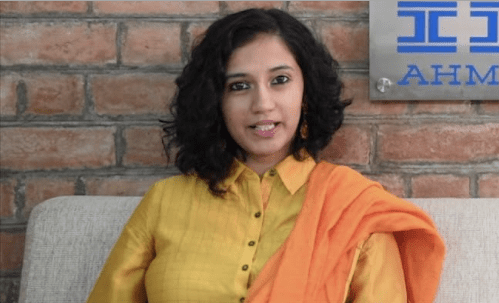
Akshaya Vijayalakshmi (Pilani, ‘03) is an Assistant Professor at the Indian Institute of Management, Ahmeda- bad. She is a multi-methods researcher interested in consumer-related issues. She completed her PhD in mar- keting from Iowa State University. Here’s an insight into her journey so far.
How do you think BITS gave you the necessary skills to become an academician?
BITS gave me my first taste of freedom and responsibility in any real sense. The opportunity to meet, interact, and live with people with impressive talents was a huge learning experience for me. It set me on a path of lifelong learning and desire to engage with the world more critically. Moreover, in BITS, the administration treats you like an adult holding you responsible for your actions (e.g., lack of mandatory attendance, student-run OASIS and APOGEE, etc.) which was helpful. BITS also helped me meet my husband, who further contributes to my development professionally.
Some of the articles written by you reflect your strong opinions you have regarding several contem- porary gender issues. What are your views regarding the representation of women in the corporate sector?
The numbers clearly show that Indian women have been dropping-off the workforce in the last few years. It is documented that many women pay the “marriage penalty”. That is, we have a significant number of people who are educated and qualified, but not present in the workforce. Women are not just absent in corporate or business or academic spaces but also in public spaces. You don’t see women hanging out in parks or footpaths in the same numbers as men. Primarily, women are relegated to their houses and even within that, specific spaces. It will take a lot of work to make women more visible in various spaces. We can begin by pushing for the representation of women as members and leaders in our committees, clubs, and labs. If we start small and early, we will go on to see women in boardrooms, parliament, and as Nobel prize winners.
What advice do you have for a prospective MBA student? Do you think the motivation that a lot of engineering students have towards pursuing an MBA is problematic in any sense?
Read a lot and as widely as possible is my only advice to a prospective MBA student. I would suggest that students use their time at BITS to evaluate their higher studies options and if unclear, maybe work for a short while, as that sometimes provides clarity.
From writing articles and blog posts to featuring on podcasts, you seem to be involved in a lot of activities besides your professional career? How do you strike a balance between job and interests?
These activities are an extension of my professional work. Most of the articles that I have written so far have been related to my research interests or work. So the only additional demand on my time is to craft my message clearly and coherently. I consider writing for the papers as a part of my job, as it makes research more accessible. Having said all that, I must admit that these additional pursuits are very demanding, but in Kon Mari’s words - they spark joy.
You pursued your PhD from Iowa State University. What differences and similarities did you notice in the teaching practices adopted in India and the west?
I can only comment on PhD education since that’s the degree I obtained abroad, and I can compare it that to PhD courses at IIMA. The main difference is that in the USA, the Business School is part of a University, which meant that one could take a wide range of courses. For example, I took classes in Statistics and Psychology from the respective home departments. There are very few places in India where you can get that kind of education. This exposure to various colleges and the courses that they offered helped me widen my research pursuits. Moreover, my roommates during my PhD program were in non-business disciplines, which again led me to much broader engagement with research and teaching practices.